
Irina Dzhus about the brand DZHUS & her journey in the fashion world

About 10 years ago, I saw, on Instagram, some cool clothes that could be transformed in a second. Architectural cuts, monocrom shades, a vibe of some futuristic movies. It was the designer Irina Dzhus & her creations. I followed her performance over the years and I saw that the clothes were not just transformative, but activists. And more an more interesting. Therefore, I have decided to talk to Irina Dzhus again about the incredible brand DZHUS & her journey in the fashion world. And to see (I think it is a premiere) some pieces from all (yes, all!) DZHUS collections, explained, in some words, by the designer herself – see the pictures, below.
(Up: ABSOLUTE – upcycling craft as an coping mechanism against trauma)
See more of her creations – on – https://www.irinadzhus.com/
The first interview with Irina Dzhus on www.dreamingof.net – HERE.
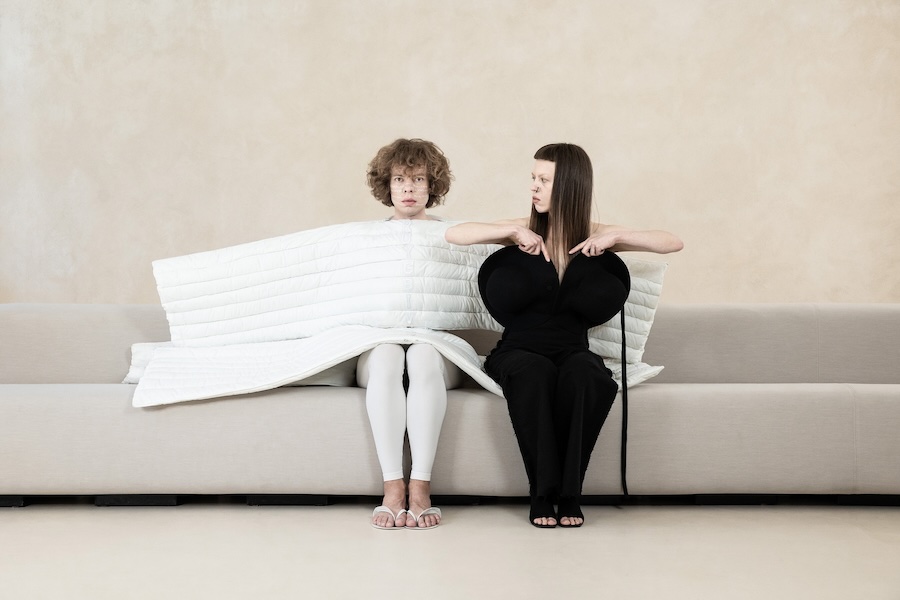
ANTICON – deciphering of happiness programmed in civilisation’s iconosphere
I discovered the brand 10 years ago and I am still amazed by what you can do with some fabrics! How would you describe these 10 years, the emotions that you encounter along these years?
Thank you so much, dear Alina. Fabrics, indeed, possess an unimaginable potential, still to be discovered, whereas my sensitivity blazes my creative trail through the years. From fascination with sacramental art or paleontology, to awe and desperation of the war escape, and finally, a striking personal trauma turning creation into catharsis.
Alongside emotions behind my concepts go reflections accompanying the process: devotion, frustration, exaltation, apathy, anxiety. Under an overwhelming dome of determination, grows a humble desire of a release from the duty at the end of the day.
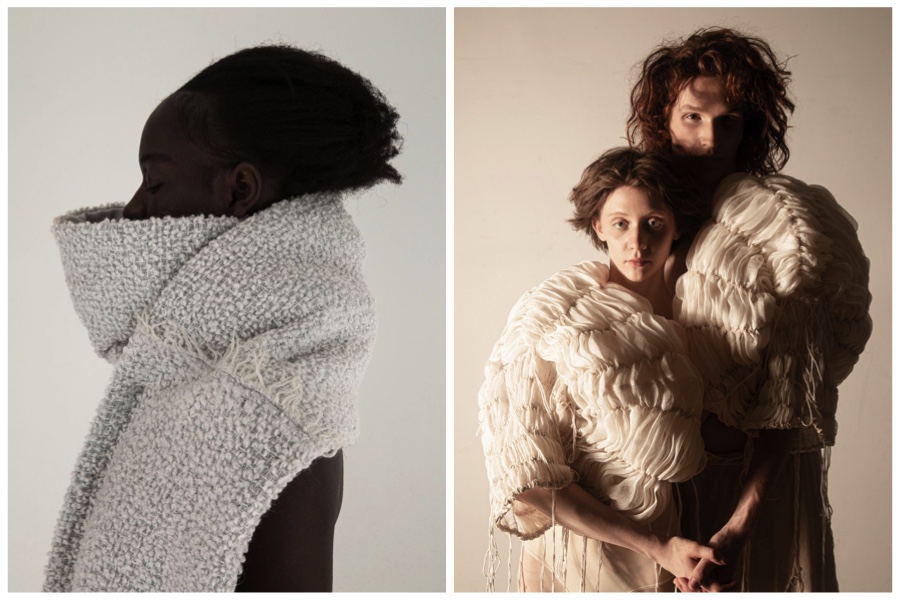
TRANSIT / AW23 – evacuation superheroes portrayed in their inevitable change
THESAURUS / SS24 – wearable architecture questioning gender stigmas
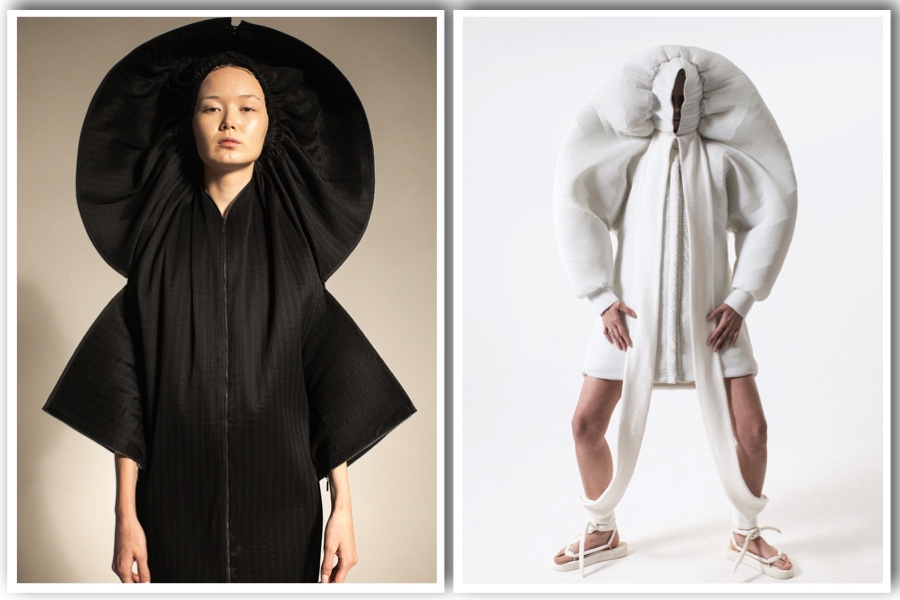
PHYSIQUE / SS22 – exhibitionism and empowerment in the media era
SURROGATE / AW22 – illusion as the fundamental notion of the metamodernist culture
How has the fashion world changed, in your opinion, in these years? The good sides, the bad ones?
Trends became way more individualistic. Day by day, the entire industry alienates from the “indoctrination” model, vectoring towards supplementation of personalized bubbles. Now, fashion priorities and promotes sustainability, and some progress is evident, ideologically and practically. Today’s fashion is notably declarative: within the 10 years, its function has changed from status-indicating aestheticism into a social narrative medium on a therapeutic and planet-saving service. Of course, I’m exaggerating the contrast for the sake of vividness, as well as speaking from the macrocosm of my own evolution.
Human replacement with technologies has become a trivial speculation. Are the cherished crafts and intellectual power under threat of devaluation? That would evoke an unprecedented, global revision of the common notions, hierarchies, aspirations, and landmarks. Well, I don’t consider myself authorized for estimating the “good and bad sides” of the changes we are witnessing, neither would I operate such binary vocabulary at all.
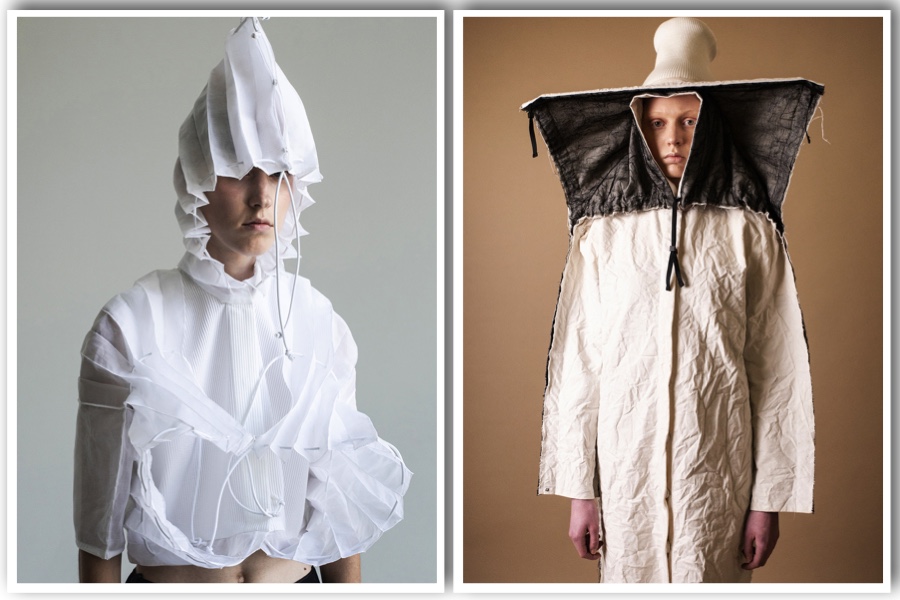
ECOPACK / SS21 – packaging allusion as a recycling propaganda
SURROGATE / AW21 – a kinetic synthesis of an object and its alternative projections
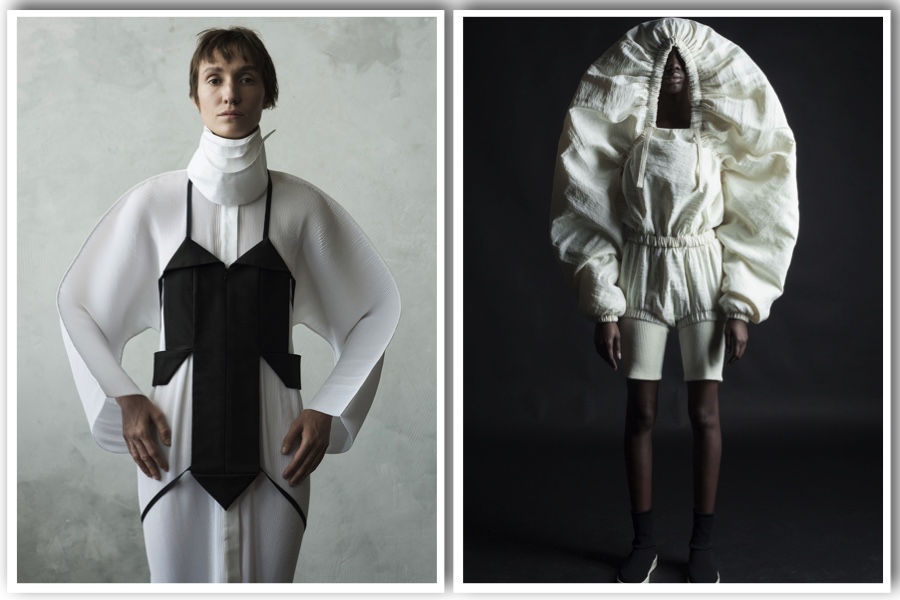
ALGORITHM / SS20 – poeticism of work rituals in their accuracy and sequence
MISCONCEPT / AW20 – ironical deconstruction of must-have stereotypes
What was the hardest thing for you in all these years? The happiest and the most difficult moments? Why?
I’ve only experienced happiness once in my life. It has, ironically, given a start to a disaster. Even going through a personal tragedy, I was still expected to create and forced to maintain my professional activity. How cruel the industry must be to push a grieving individual, longing to resolve a private urgency and, naturally, apathy to all other matters, back into the melting pot of a cultural duty…
In short, when, shocked and helpless, I was no longer capable of working in a “normal”, socially acceptable mode, nor able to gain business efficiency, my OCD-driven eagerness has, on the contrary, escalated, so, technically speaking, it was the “right moment” to enrich the industry with another trauma-inspired project. Instead of a helping hand offer, I even got cancelled by certain employers and collaborators, and ended up with a balance varying from zero to deeply negative. Thus, I had no other choice than to cynically sell my intimate drama and pain for some prestigious grants – and deliver the eminent controversial performances. I worked through constant emotional suffering and frequent psychic episodes, just because no one was interested in supporting my recovery and preserving my sanity, but only in commissioning the next portion of entertainment. It came out as a macabre and grotesque celebration of my inner ruination. As I revisit that exceptional happy moment, it was, beyond any doubt, worth it.
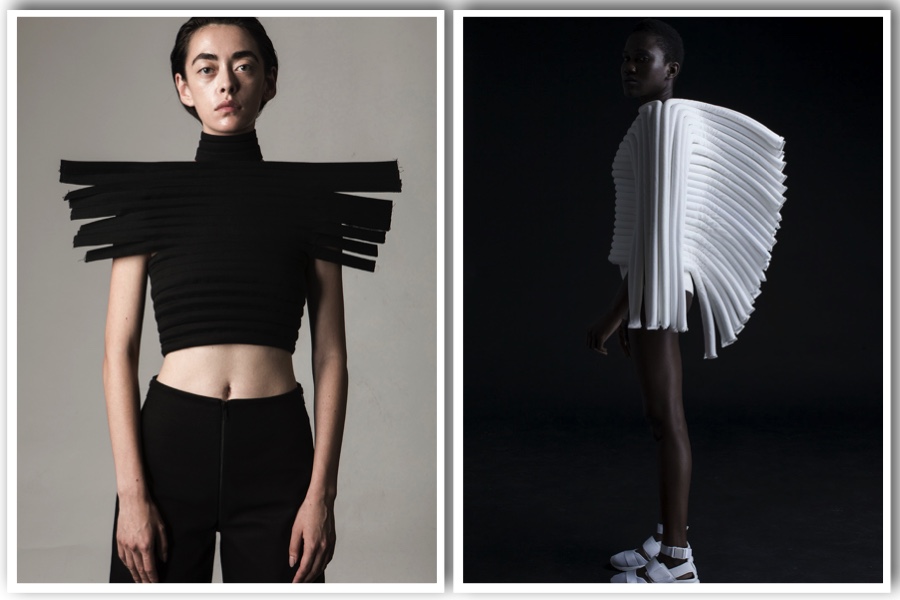
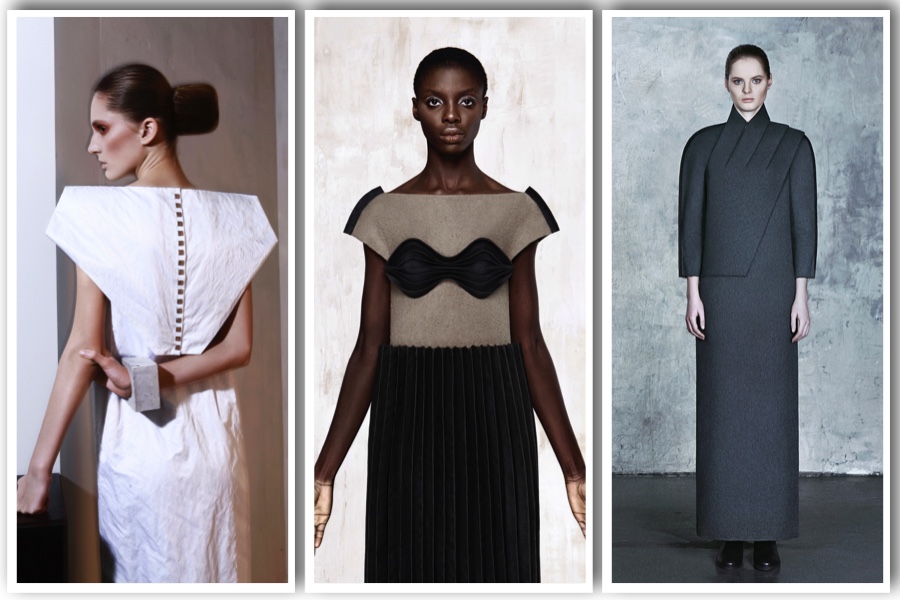
PROCESS / SS19 – in-progress aesthetics: mesmerising charisma of the unfinished
CORPUS / AW19 – architectonics of physicality as a triumph of function and synergy
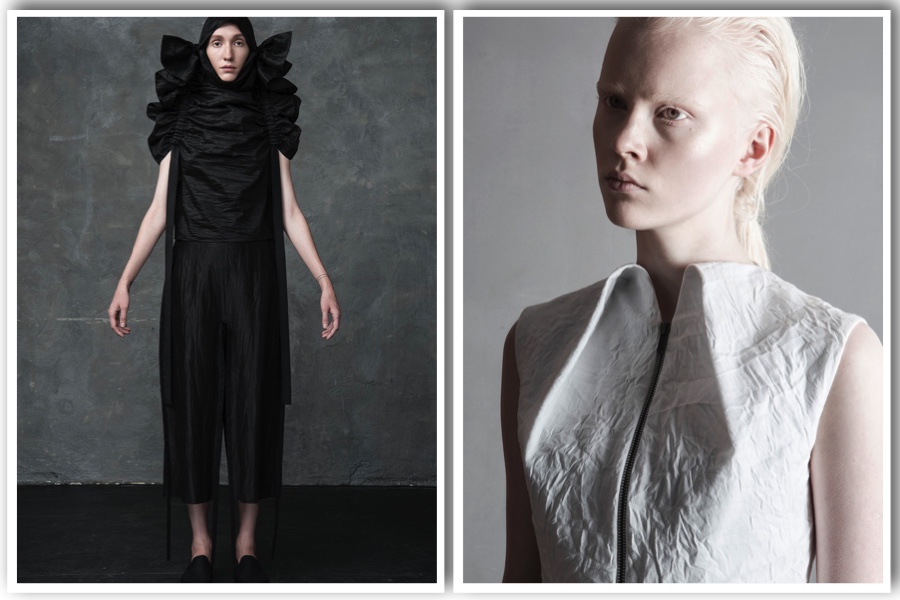
ARCHAEA / SS18 – palaeontological fetishism incorporated in patterns and finishes
ESCAPISM / AW18 – a subjective Utopia as a transcendental survival mode
I will come to you with the first question we have started our encounter, back in 2016: every piece you design carries a message. What is the most powerful message that all your collections carry?
While DZHUS’ pattern-making innovations incarnate in multipurpose outfits, our values stand for the cruelty-free and inclusive approach as a “new normal”. I would synthesize my aspirations in one motto: “ethical transformation”.
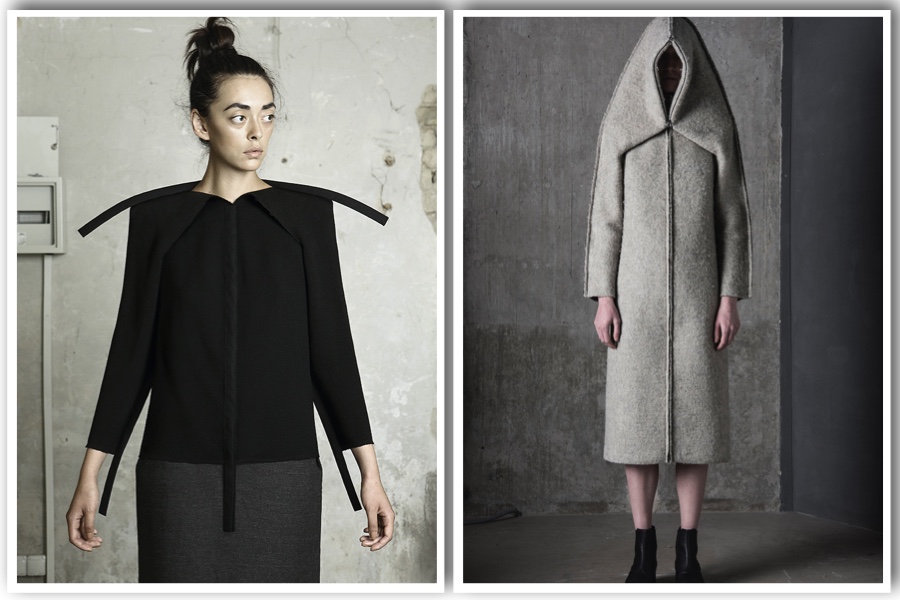
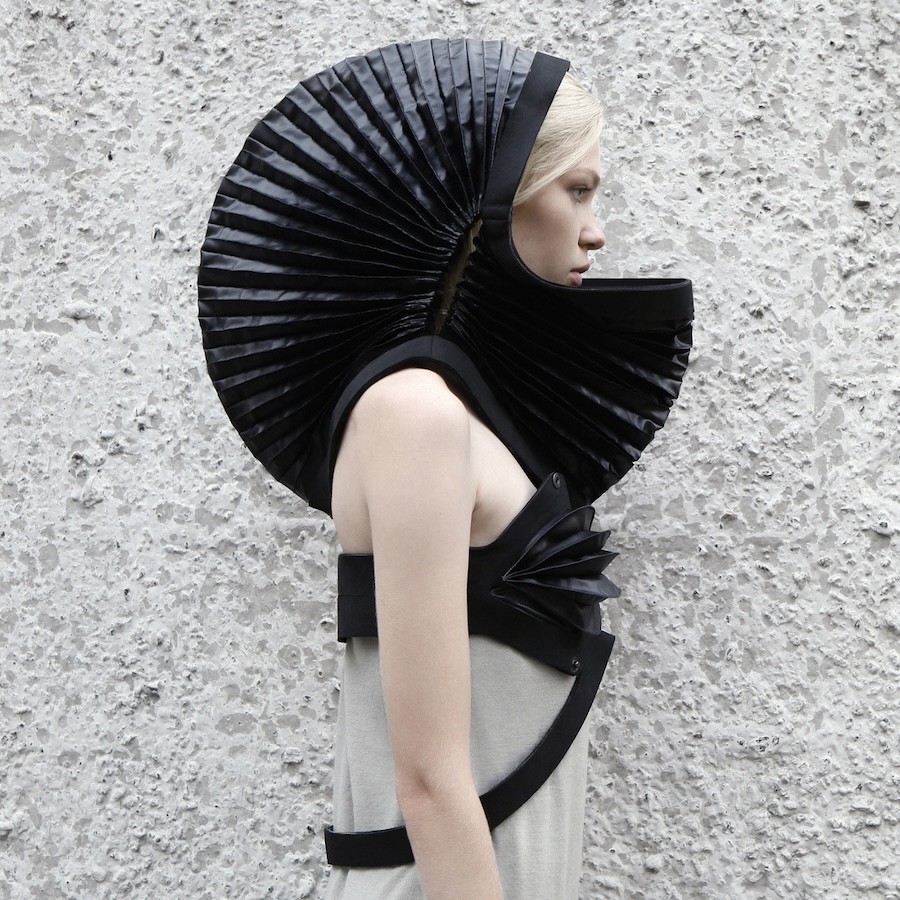
CARBON / SS17 – ode to the primordial ground of Ukraine’s industry and art
TECTONIC / AW17 – evolution of the planet as a garment transformation leitmotif
You still have pieces only in black and white. What is different, though?
The DZHUS collections are rich in dimmed shades within the ecru, grey, and earthy palette. The festive and dramatic black-and-white-combo appears in the lineup as a special guest. Since 2016, our color solutions became much softer, with a priority for white variations, highlighting the architectonic shapes, the distinctive textures, and the overall introspective narrative.
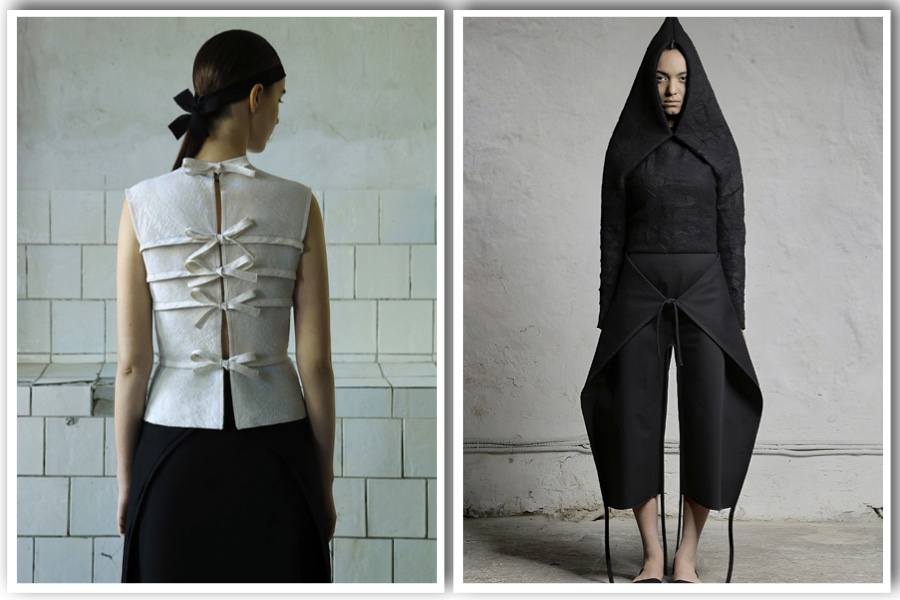
PRO FORMA / SS16 – uniform tribute as a manifesto of utilitarianism
NIHILISM / AW16 – self-sufficient design versus trend populism
And, in the end, the same question, as ever: why do we need fashion in our lives?
Style is an efficient tool for self-affirmation, healing, political influence, and so much more. The notion of fashion, in its current, metamodernist interpretation, is vividly more spacy than “a seasonal trend digest”. It is missioned to speak up, fight, help, unite, educate, or release. Yet, importantly, fashion is optional, and we do not necessarily need it in our lives.
TAGS: collection, design, designer, Dzhus, fashion, interview, Irina Dzhus
Latest feeds @alinaaliman
