
A fusion between worlds: interview with the young designer Andreea Bora (UAD 2026)
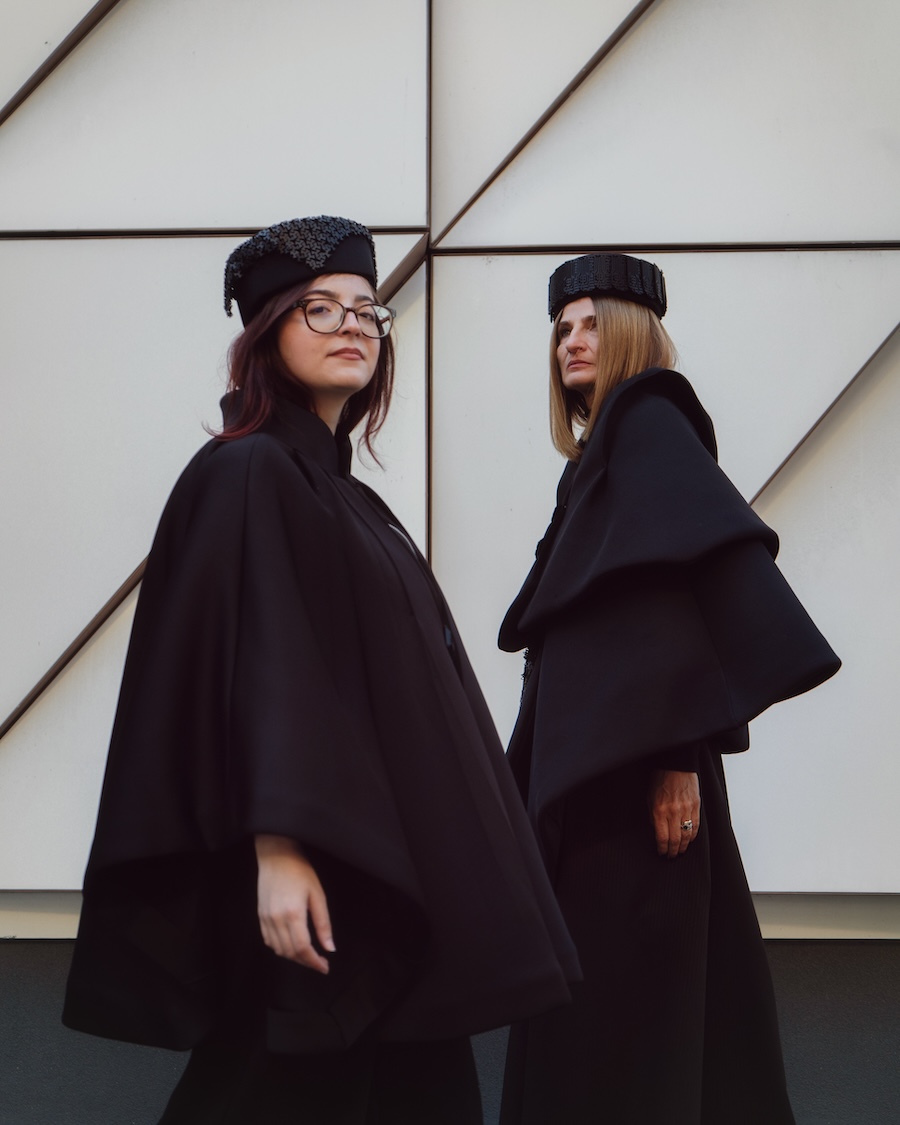
“You are not only buying an object; you are supporting a creative process and a local fashion scene that needs trust in order to grow”, says the young designer Andreea Bora. So, so nicely said! I have to say that FU SHI was the first collection that I put on my list of favorites from UAD 2026 runway. And seeing closer the fabrics, wearing the outfits, talking to Andreea Bora about the process of 3D printing and about hours of studies… all made me think that my instinct was perfectly right. Keep your eyes on her!
Andreea Bora – collection (MA) FU SHI – @andreeea_bora.
More about all UAD 2026 collections – here – on the link.
Photography: Ana-Maria Fronie „Cinci” – @five__fro / Make-up: Ana Metes – @anametes / Hairstyle: Bogdan Cîrdei – @bogdanc__
Your collection for 2026 UAD Fashion was inspired by…
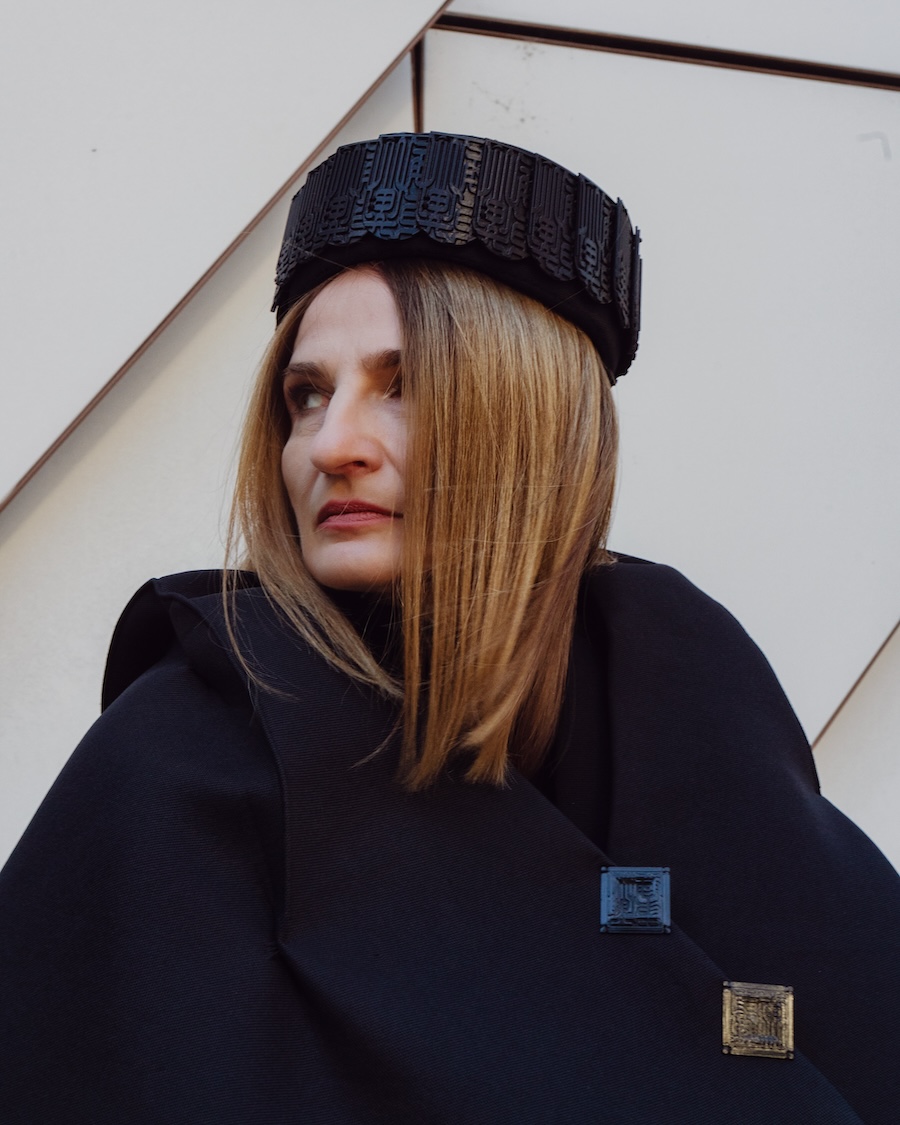
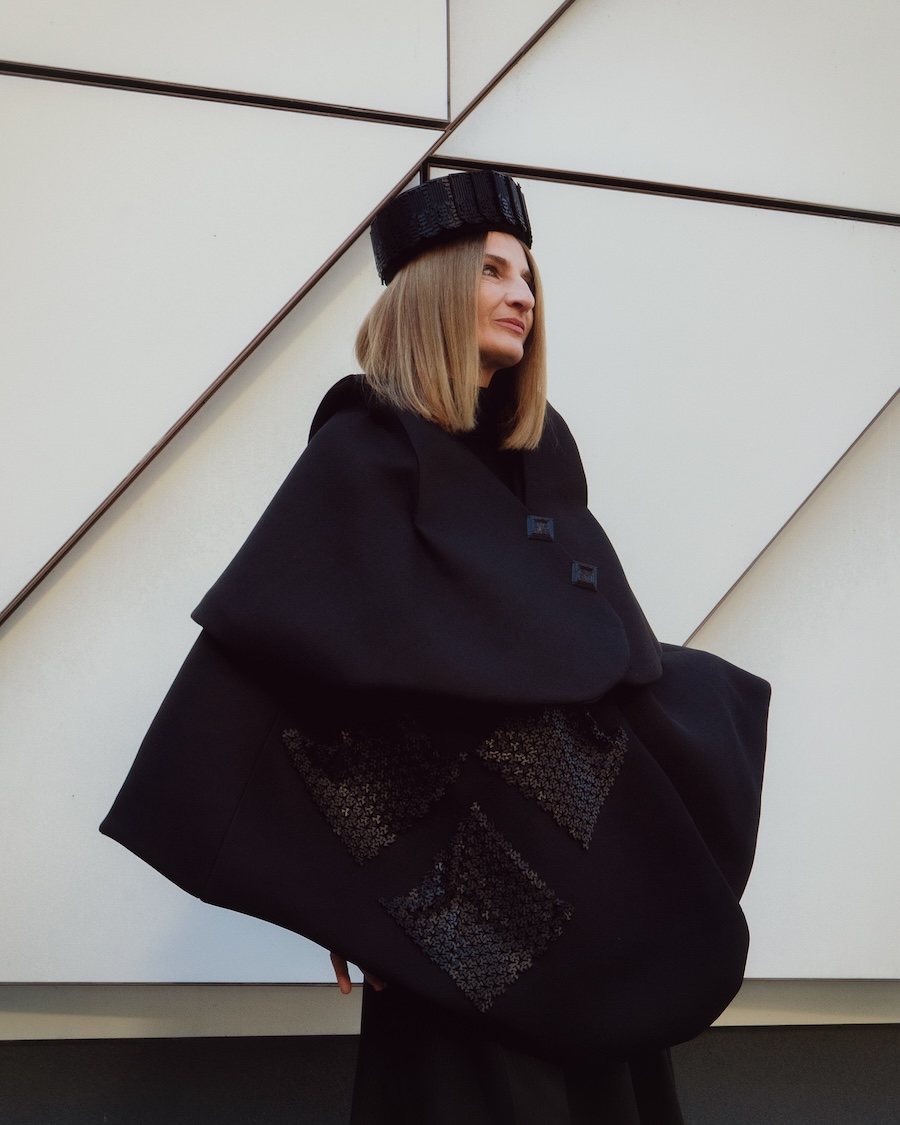
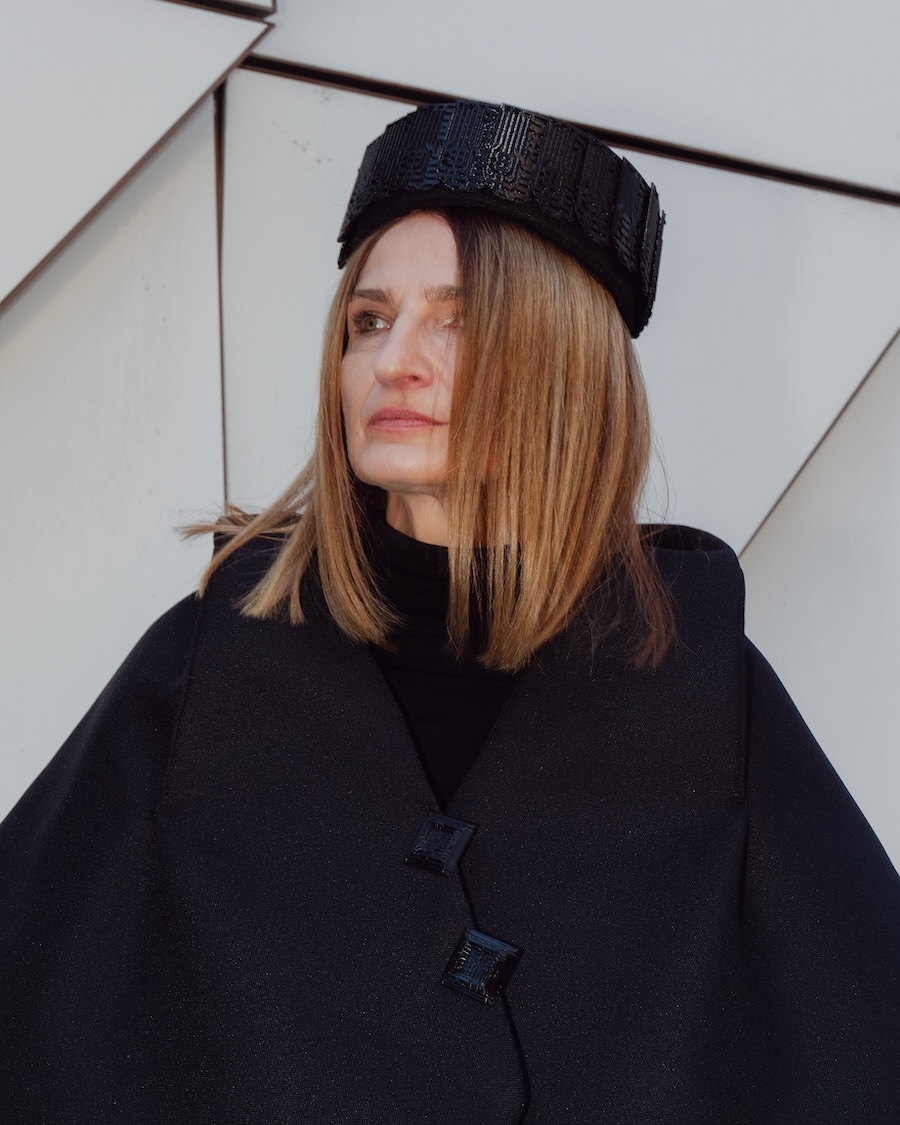
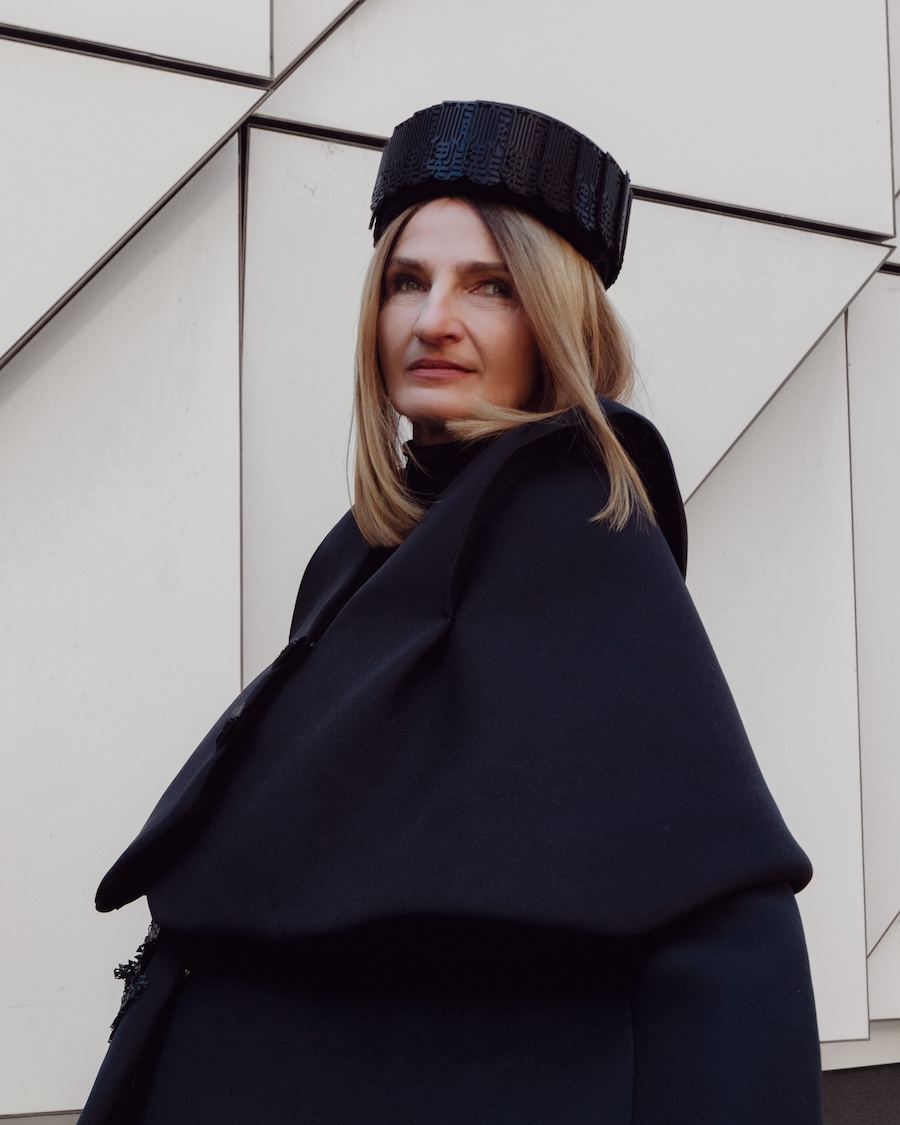
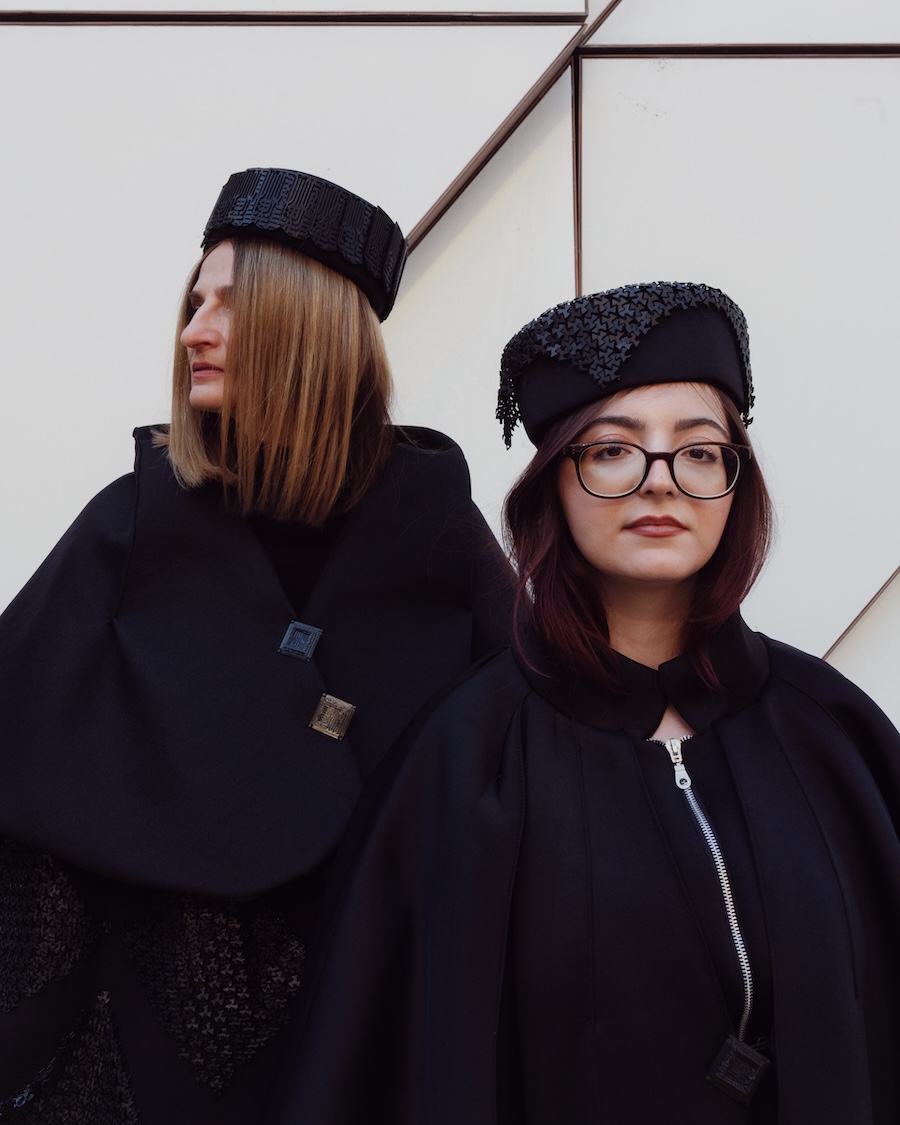
My collection started from a fusion between two worlds that may seem very far from each other at first: ancient China and contemporary technologies. I liked this contrast because it gave me the possibility to work with both historical references and technical experimentation. What interested me was not to reproduce ancient Chinese clothing literally, but to understand what made it so complex: the layering, the closures, the proportions, the symbolic details, the way the garment existed around the body. From there, I tried to bring those ideas into a more contemporary direction, through structured silhouettes, functional details, material manipulation and 3D printed elements. For me, the collection is about how tradition can continue to evolve. It does not have to remain fixed in the past. It can be translated, questioned, rebuilt and pushed forward through new materials and new technologies.
You chose these fabrics because…
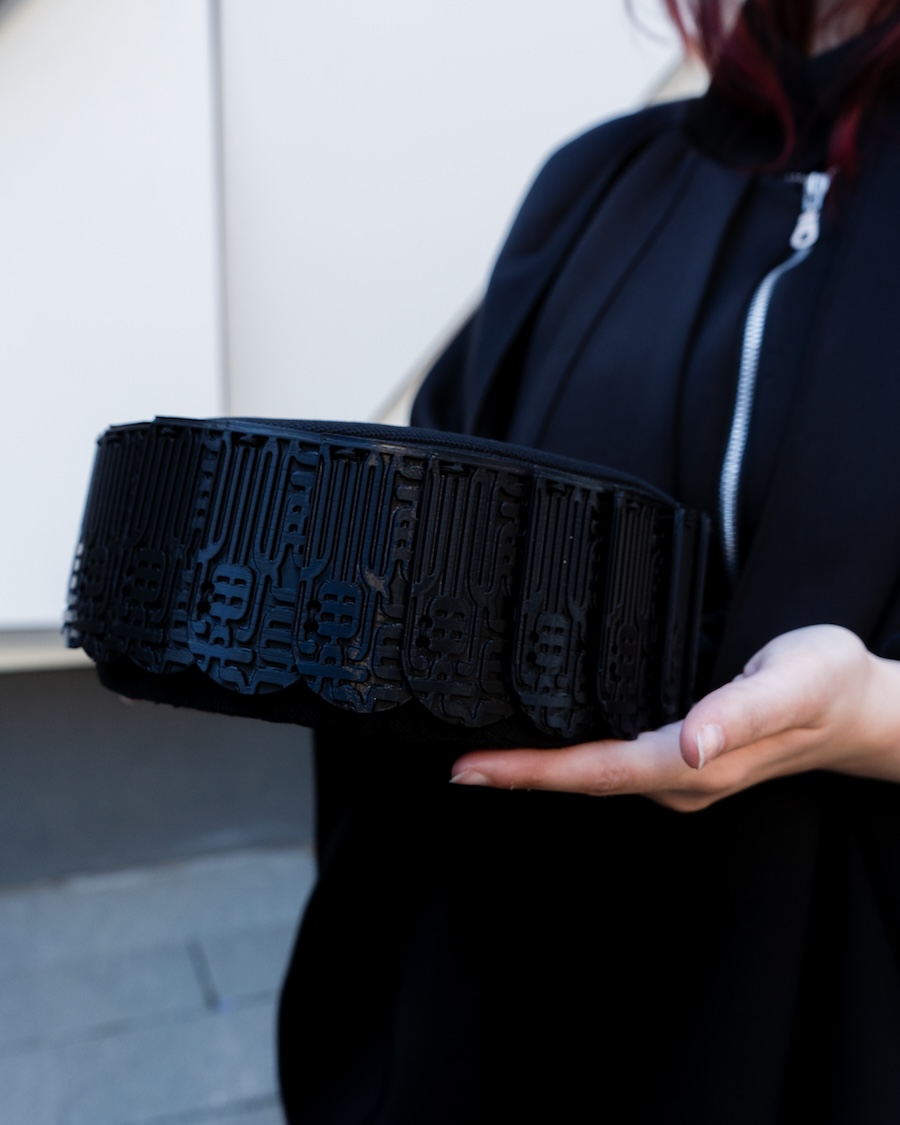
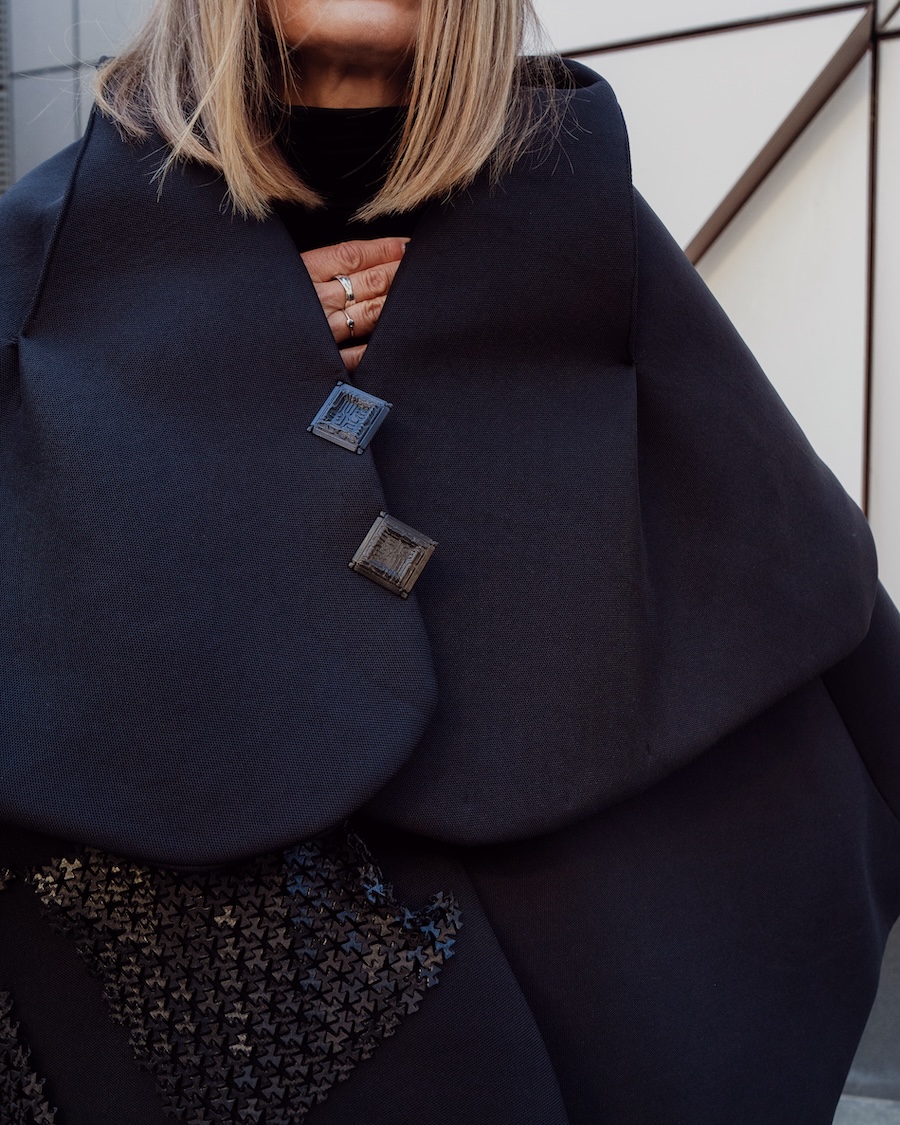
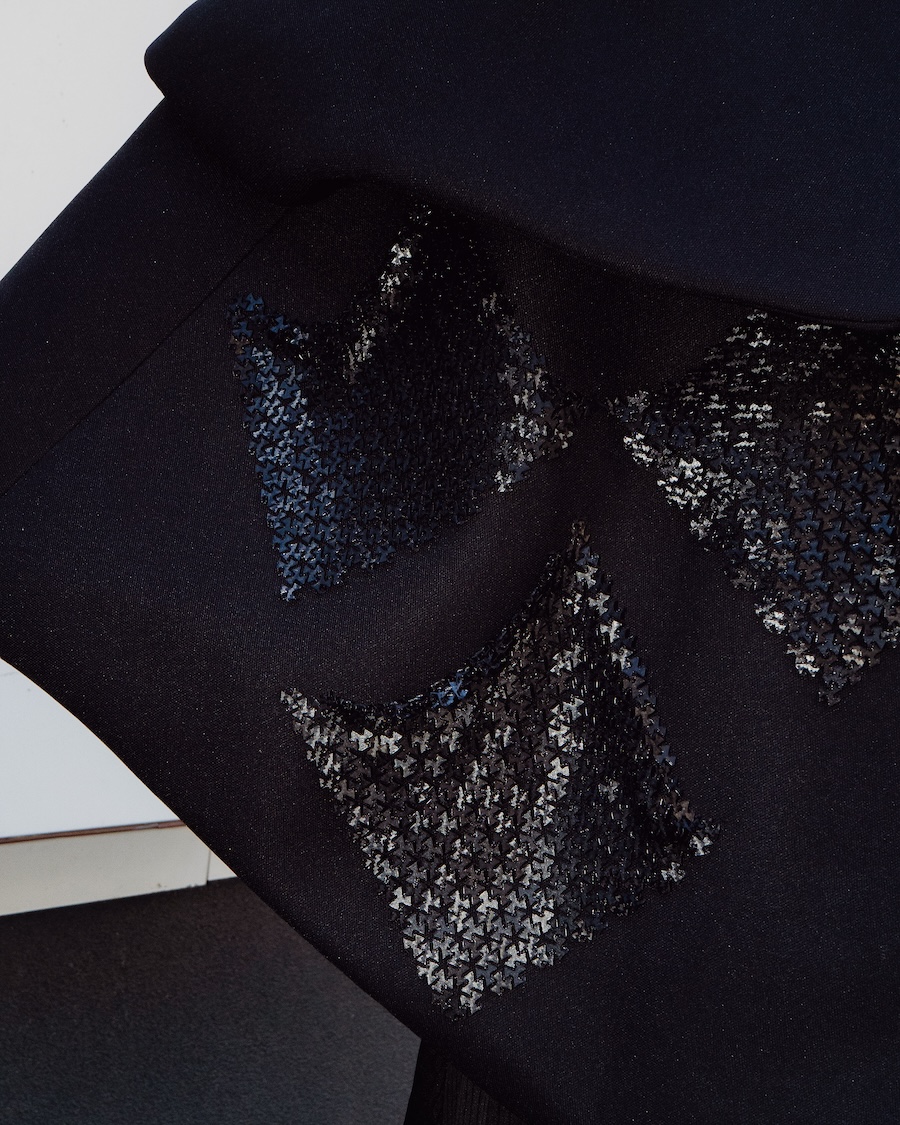
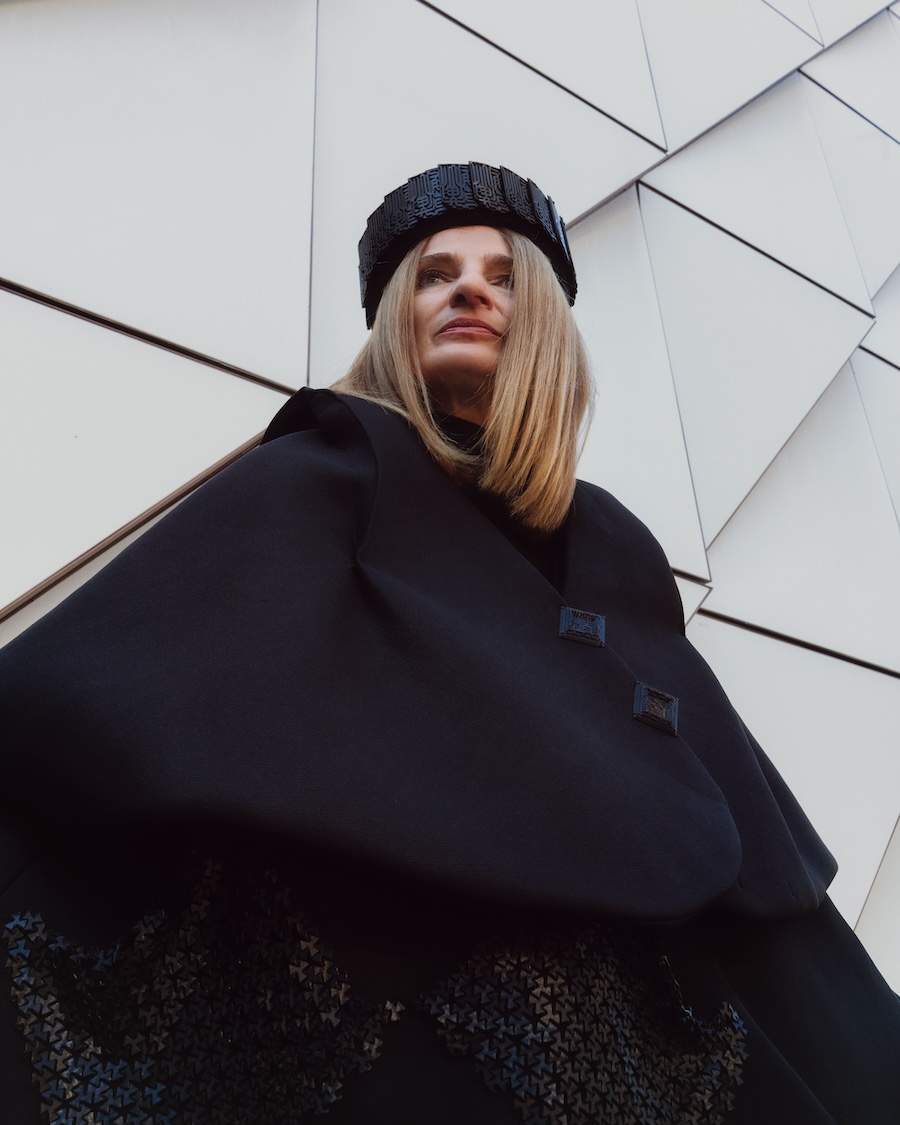
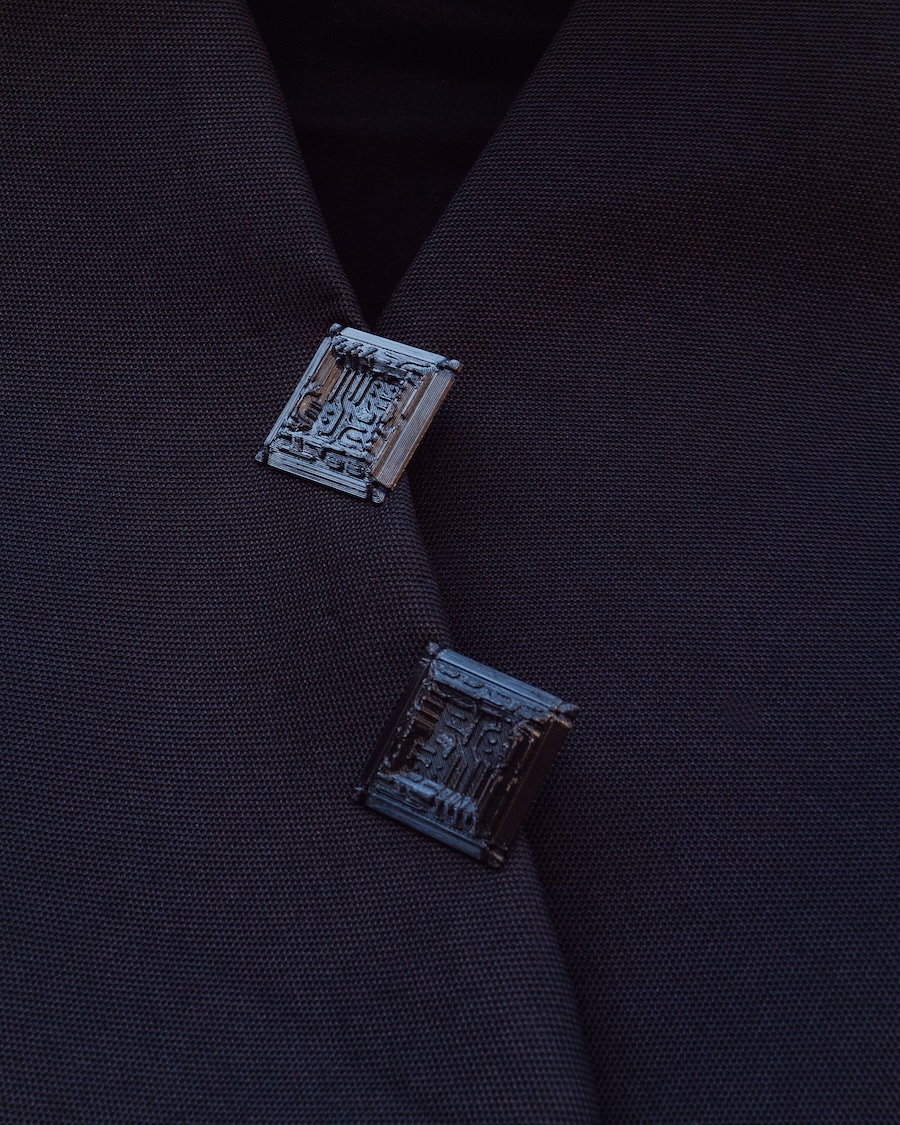
… I needed materials that could support volume, structure and layering. I wanted the garments to feel protective, almost like they create an architecture around the body, so the material had to be strong enough to hold that presence. Rather than using classic printed patterns, I focused on building the surface of the garments through texture, material manipulation and 3D applications. Some elements are flexible, while others are attached directly to the garment, but most of them go beyond decoration. They become part of the way the piece functions: they can close the garment, add movement, create sound or influence the way the garment reacts when it is worn. I think this was important for me because I wanted the details to have a reason. I am very interested in the point where decoration becomes function, and where function can still be visually strong.
Tell me about the actual process of making the collection – how hard it was, how many hours you have spent doing it?
The process was hard, but in a way that I am very grateful for. It was a lot of work: research, sketching, pattern making, testing, cutting, sewing, correcting, adjusting proportions, working with 3D printed elements and constantly trying to make the idea work in reality, not only on paper. I cannot say the exact number of hours, but it was definitely hundreds. During the final period, most of my days were built around the collection. It was physically tiring and sometimes mentally overwhelming, especially because every small decision affects the final result. But at the same time, I really loved the process. Even when I was tired, I knew I was working on something I had wanted to make for a long time. I liked the research, the technical challenges, the moments when something finally worked after many attempts. It was exhausting, but it also made me feel very connected to the project. I think that is the beautiful contradiction of fashion: it can drain you completely, but it can also make you very happy because you see an idea slowly becoming real.
How can we solve the dilemma: why should we invest in a Romanian designer piece instead of one from a famous brand?
I think we should stop looking at Romanian designer pieces as an alternative to famous brands and start seeing them as something valuable in their own way. A famous brand already comes with status, history and visibility. You are not only buying an object; you are supporting a creative process and a local fashion scene that needs trust in order to grow. For me, investing in a Romanian designer also means investing in originality and in a closer relationship with the story behind the garment. It might not have the same global recognition as a luxury brand, but it can have more intimacy, more intention and sometimes more courage. A designer piece does not have to imitate a famous brand to be worth it. Its value can come exactly from the fact that it is more limited, more personal and more connected to a real person’s vision.
Tell me one personal story related with fashion world…
During this collection, I became much more aware of the distance between the final image of fashion and the reality behind it. From the outside, people see the finished look, the photos, the show, the atmosphere, but so much of the process is actually physical, practical and invisible: carrying heavy garments, protecting the pieces, fixing details last minute and making sure everything works on the body. I think that made me appreciate fashion even more, because the final result may look effortless, but it is built through patience, problem-solving and a lot of work that people do not usually see.
One important lesson learnt at UAD Fashion department is…
I do not think I can choose only one lesson, because UAD Fashion changed me both as a designer and as a person. One of the most important things I learnt was patience: with myself, with the project and with the process. At the beginning, you want everything to look exactly like the image in your head. But materials do not always behave the way you expect, some ideas are not practical, some solutions fail, and sometimes you have to accept that the project needs to change. I learnt that this is not necessarily a bad thing. Sometimes the best solutions appear exactly because something did not work the first time.
I also learnt how important it is to detach yourself from your work. As a designer, you put a lot of yourself into what you make, so feedback can feel very personal. But over time I understood that feedback is not about attacking me as a person, it is about the work, about what can be improved, developed or clarified. That helped me grow a lot. I started to see feedback as a tool, not as something that destroys the project.
UAD also taught me discipline. I do not believe anymore that inspiration is something you can only wait for. Most of the time, inspiration comes while working: from research, from archives, from material samples, from tests, from mistakes, from trying again. This department forced me to become much more organized and much more honest with myself. There is not really space for “it is good enough” if you know it can be better. And maybe the biggest lesson is that, at some point, you stop answering only to your teachers and start answering to yourself. You begin to understand your own standards, your limits, your weaknesses, but also your strengths. That is not always comfortable, but it is probably the part that matured me the most.
The piece that will always be in your collection is…
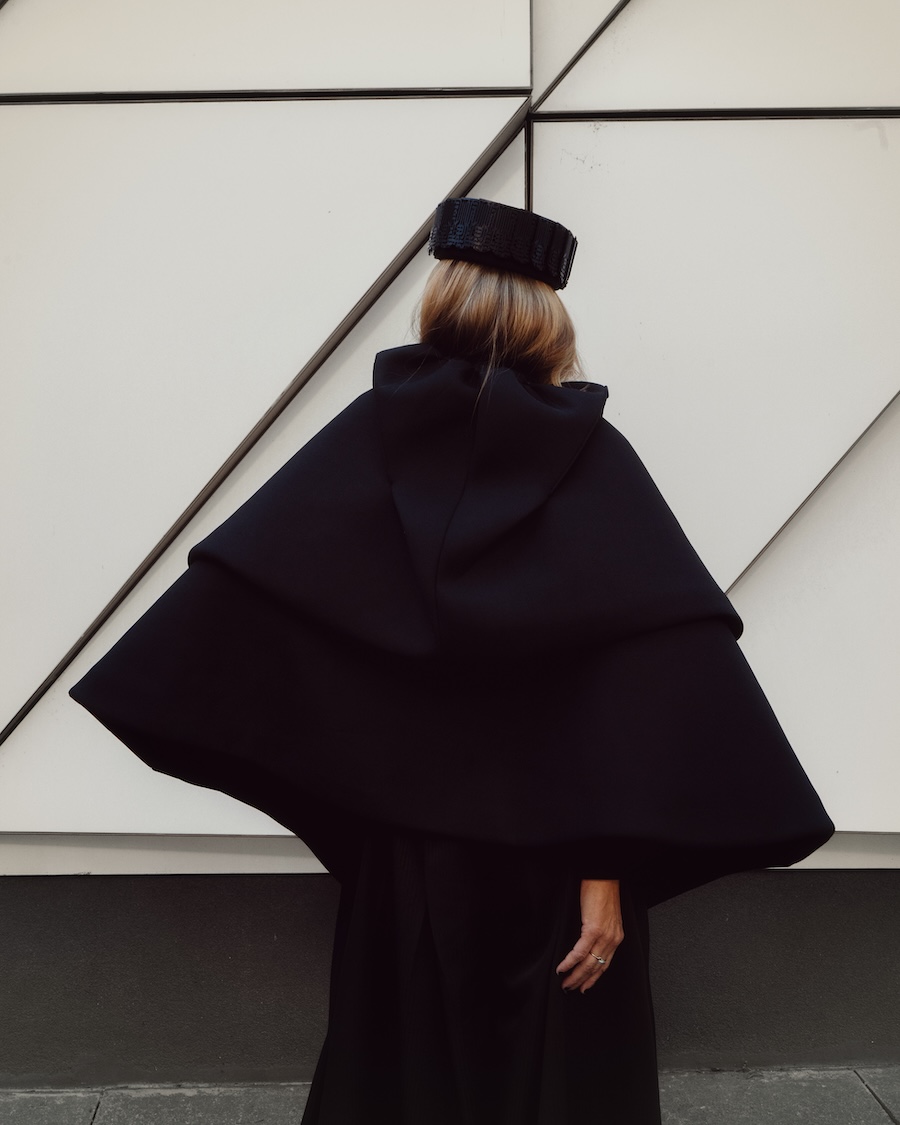
The piece that will always be in my collection is probably an outerwear piece, like a jacket, a coat or a cape. I am very drawn to outerwear because it gives me space to work with structure, layering, volume and function. I like garments that can change the silhouette and create a strong presence around the body. Outerwear can be protective, practical, dramatic and emotional at the same time, and I think that combination is very close to the way I understand fashion. I also like that outerwear allows many technical details to exist naturally: closures, pockets, layers, detachable elements, functional surfaces. It gives me the freedom to build something that is not only visually strong, but also connected to the body and to movement.
The Romanian designers relevant right now for you are…
Some Romanian designers relevant for me right now are Ioana Ciolacu, MURMUR and Ancuța Sarca. I appreciate designers who have a clear visual identity and who manage to create something recognizable, whether through construction, concept, styling or material experimentation. I am also interested in younger independent designers who are building their own language outside of the classical fashion system.
One city, one song, one movie just perfect for your collection will be…
One city would be Shanghai, because it has this mix between history, speed, urban energy and a futuristic atmosphere. It feels like a place where past and future can exist at the same time, which is very close to the direction of my collection. One song would be an instrumental track with tension and elegance, something like Elegia by New Order or the instrumental version of Run Boy Run by Woodkid. One movie would be one with a strong visual world, where costume, architecture and atmosphere feel connected, maybe something cinematic, dark and refined.
What is next for you – this year, 2026, the next year?
I have finished my master’s degree, so the next step for me is to continue developing my portfolio and to find a job where I can grow as a designer. I want to work in fashion because I still have a lot to learn, and I would like to be in an environment where I can see other ways of thinking, other aesthetics and other creative processes. I think it would be important for me to work with other designers, to learn from mentors and to understand how my own visual language can adapt to different contexts. At the same time, I want to keep developing the directions that feel important to me: outerwear, layering, functional details, material experimentation and the relationship between traditional references and contemporary technologies. I want to continue experimenting, but also to become more precise. I would like my work to keep changing, not by losing my own aesthetic, but by allowing it to grow through new experiences, new collaborations and new challenges.
Thanks, Radisson Blu Cluj for the support! – @radissonblucluj
Latest feeds @alinaaliman
