
“These heads that I make are a love letter to myself and to the world”: interview with the artist Rebeca Ulici
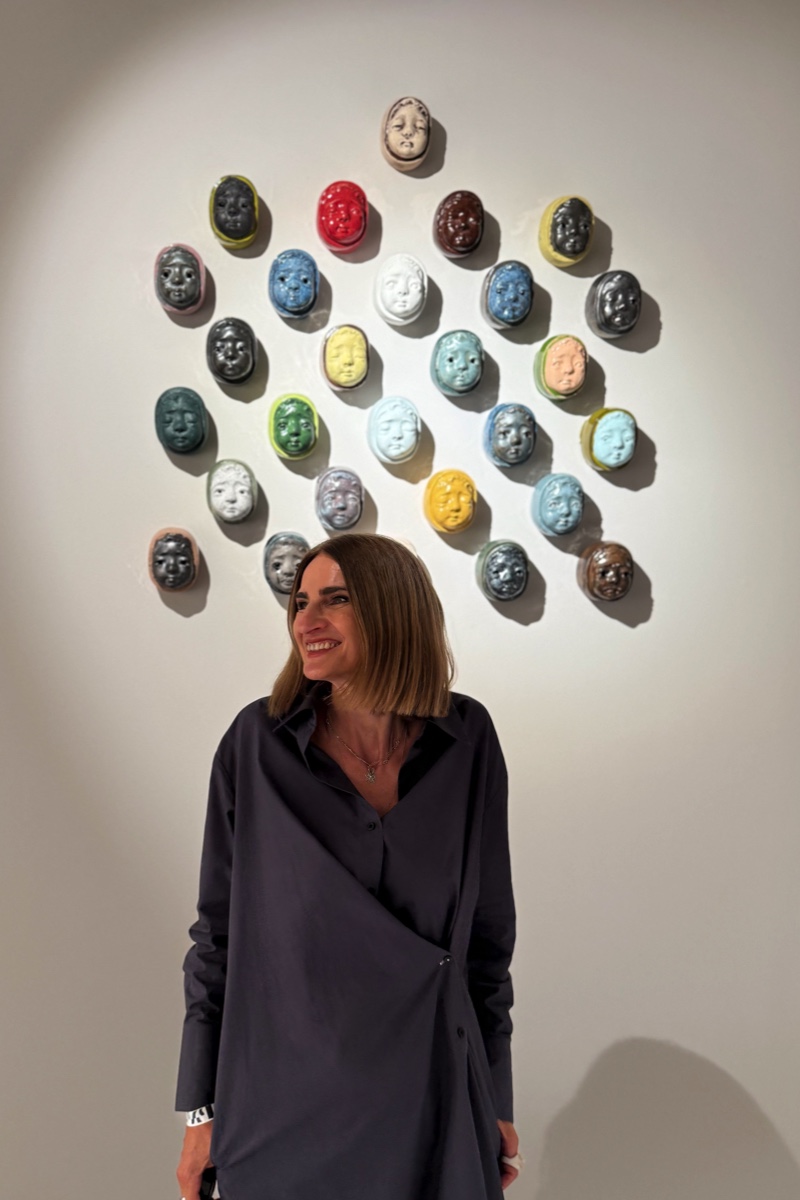
I have noticed her art works at an Art Safari Young Blood edition. I met them again, in a collective art exhibition at SAC Gallery, at Kulterra, I admired them in one Diploma edition. Finally, this autumn, when I saw the dedicated exhibition at Art Encounters, Timișoara, I knew I had to ask her for an interview. And I discovered a beautiful artist, that approached ceramics “with little curiosity and came out on the other side utterly fascinated. And a week later, I picked up a blob of clay, and ever since, I’ve never put it down”. Meet Rebeca Ulici, the artist.
You can discover Rebeca Ulici #artworks here, on Instagram – @rebeca_ulici
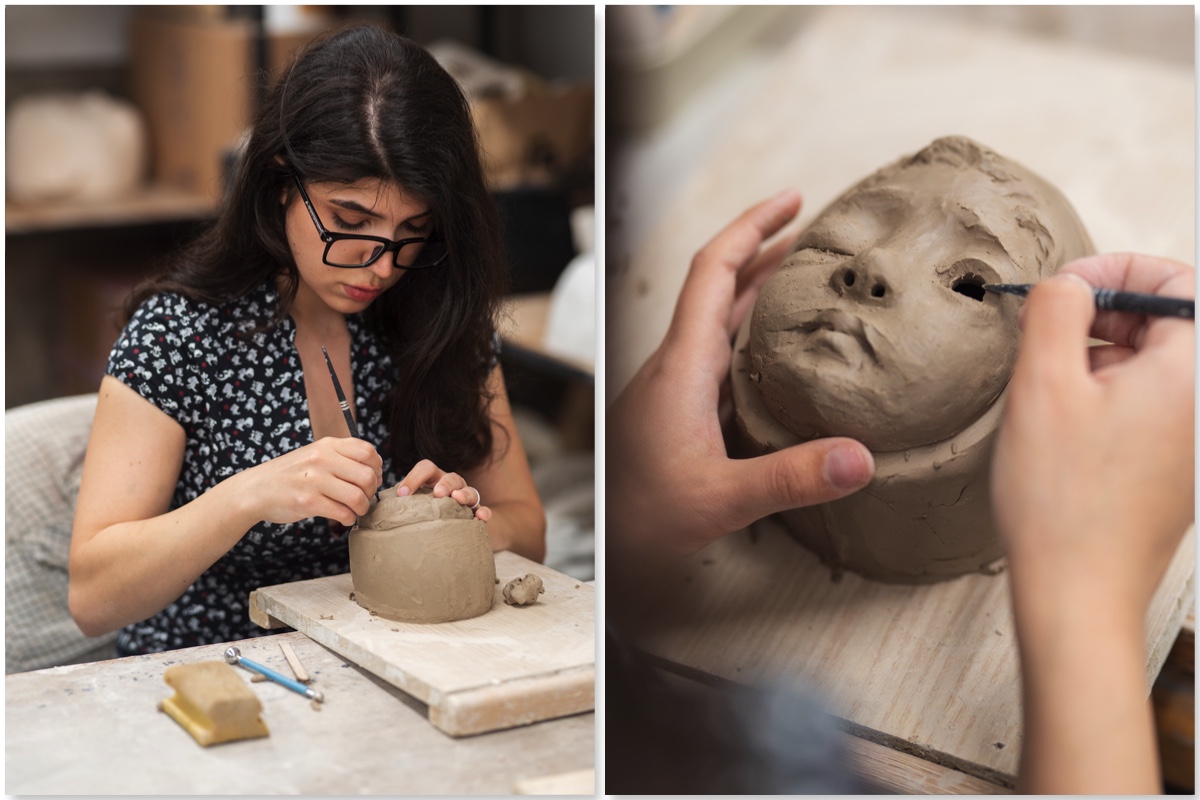
From all kinds of materials and art forms, why (and when) did you choose ceramics?
I was studying for my master’s degree in sculpture a few years ago. The course was all about the collaboration with the ceramic department. I was told that the sculpture and ceramic departments were merging into one and that I had the right and obligation to learn a few things about ceramics. I had to take some classes on the technical aspects of ceramics and its usage, the history and the contemporary aspect of it. I went in with little curiosity and came out on the other side utterly fascinated. And a week later, I picked up a blob of clay, and ever since, I’ve never put it down. It was as natural for me to work with clay as it was to breathe.
And why so many baby heads? Similar, but not the same? What is the story behind them (personal, but also professional)? Could you also tell me more about Xerox of a Xerox series, as well?
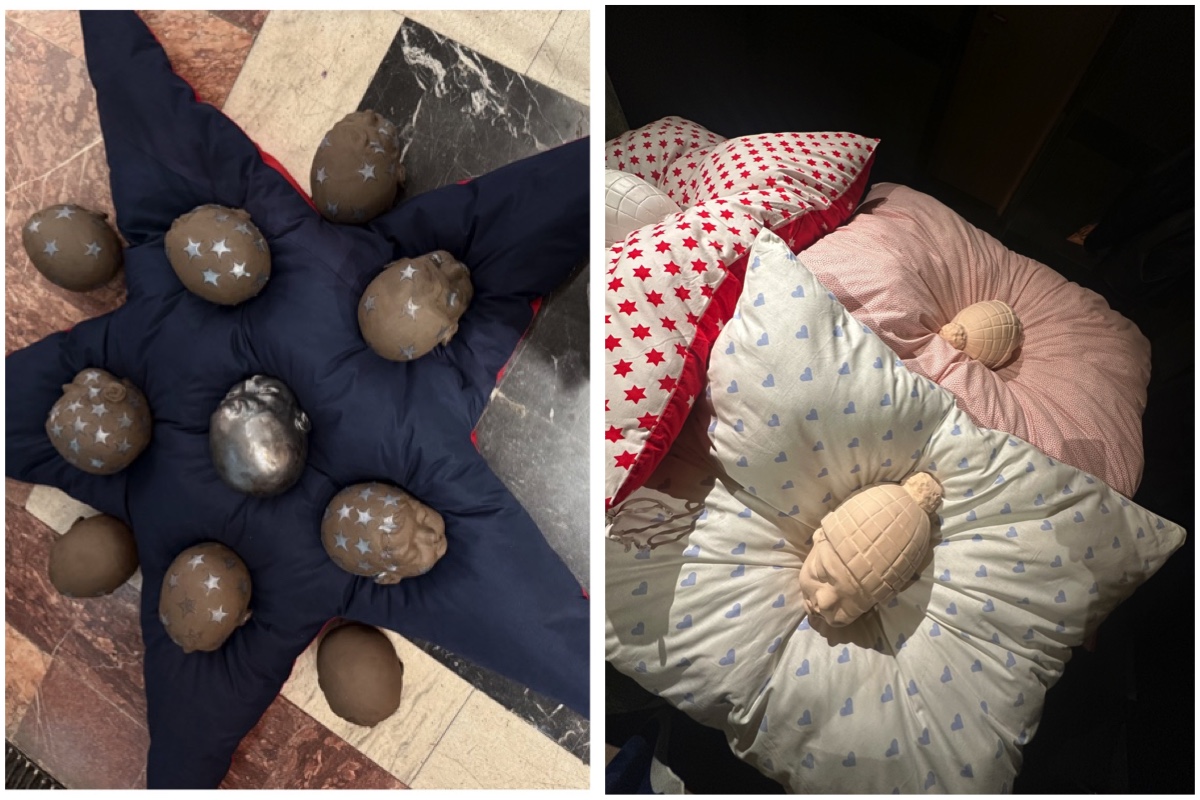
The baby heads came to be as an afterthought and a coping mechanism that I developed after the premature loss of two nephews. I began intellectualizing my feelings and thoughts regarding loss, the social construct of a baby, and our perception of it, and how it all tied to one another. The conclusion being that all of us who were born shared one undeniable fact: we were all, once, just babies. I started to use the anatomy of the portrait of a child as a canvas to convey ideas, concepts, and lived experiences. It became a compulsion that hasn’t stopped. Just like people can’t help themselves but find a form of escapism in the mundaneness of social media consumption, my form of escapism is working until my hands give out; then waking up in the morning and doing it again. These heads that I make are a love letter to myself and to the world.
In Xerox of a Xerox, I had decided to take a break from the specifics of depicting babies and took a more androgynous approach to figurative sculpture. It was more to prove to myself that I can and will do anything I put my mind to, and to prove to some of my close (and very well-received) critics that I am capable of getting out of my comfort zone. Xerox of a Xerox is also a way to exhaust a form and a shape, to see how much you can extract from it until it stops producing results.
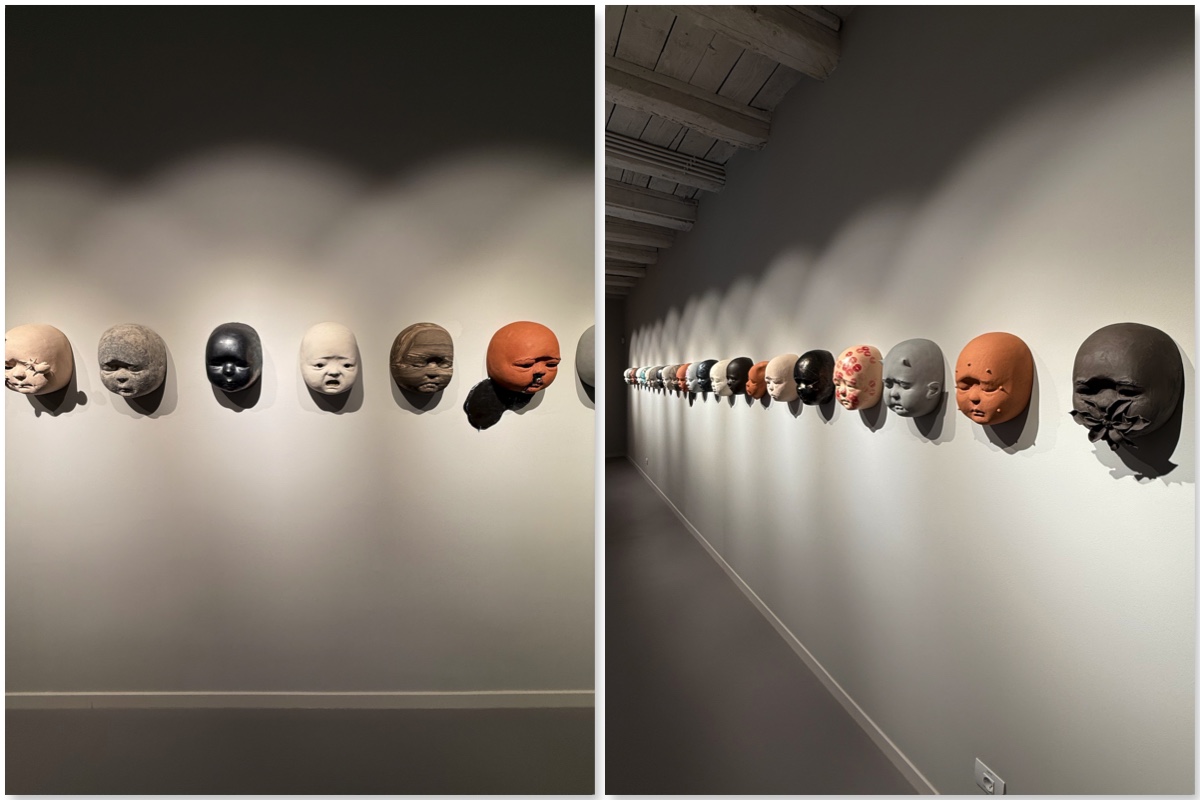
What sculpture is your favorite from all the heads you have done? And which one was the most difficult to make?
My most favorite one would be Grief Altars, one that I only exhibited once. It is my favorite because it speaks about grief, loss, and the death of my beloved mother, Nina. It was the first work I made after her passing, and I kept it locked away in a storage room for almost two years before finally exhibiting it. It was the one that helped me navigate through the process of grieving. I don’t have a work that was particularly difficult to make, but I do have one that was difficult to handle. “About Us”, a set of three busts I made in collaboration with SAC Gallery to be exhibited at RAD Fair, gave me the painful experience of having to handle such large, fragile works. At one point, it became overwhelming, especially with all the worries I had while the work was away from me.
Which sculpture attracted the biggest (or the most) reactions?
That’s for the public to decide but I tend to agree that the smaller baby heads were an instant hit this year!
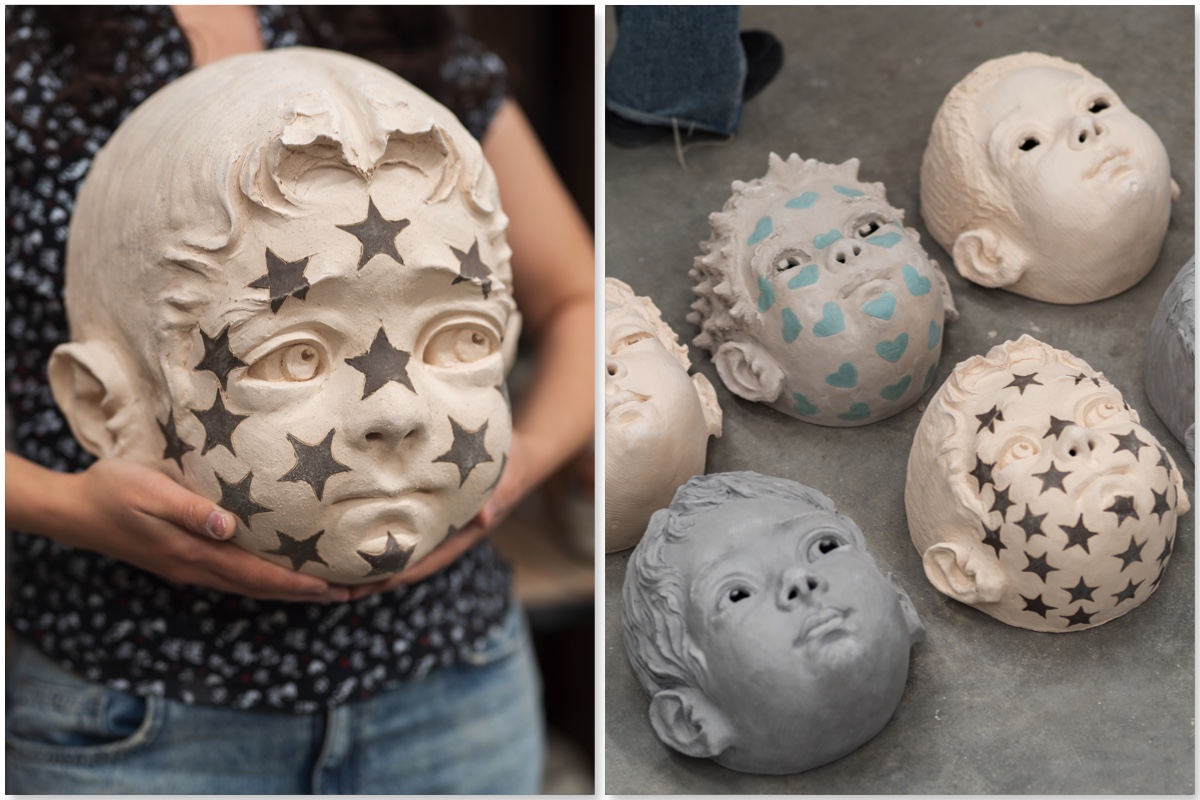
How many ideas remain in the sketchbook, how many are thrown away in the trash?
Not many in the notebooks, but lots of them get broken up into pieces and thrown into bins. Every two months, I make some quality control decisions regarding my works; what’s not up to my standards will end up as trash. It is unfortunate for my future manager, but otherwise, I would not have space to store them. I make around 200–350 sculptures a year, which is great for business but bad for my atelier. And now I’ve been downsized even more, so it has become difficult, but I will prosper and manage it as best and as positively as I can.
I read in one of your interviews that you prefer to work constantly and with a schedule, instead of being carried away by inspiration. How much is sweat, how much is talent and how much is luck in an art work?
Discipline above everything. Discipline encapsulates all three. Something I cannot drill into people’s minds enough is the importance of discipline and a schedule. I hold a very rigorous, six-days-a-week, eight-hours-a-day work schedule in the atelier to be able to have enough works in my repertoire for the curators to choose from. I would not have gotten where I am if it were not for discipline. Inspiration is a beam of light that shines on you while you work, not before or after. Luck is something that will find its way to you if your work is already there for the public to see. 90% of it all is sweat and work.
People underestimate just how much work goes into building a solid base for a career and making works “ready to go” for exhibitions. Ceramics is a medium that requires a month in advance for the work to be completed. The packing of it lasts about a day or two, followed by writing the concepts and technical details for the curators, shipping and handling the works, installing them… The easy part is making the work. The sweat of it all is just bureaucratic and manual labour regarding handling, storing, installing, and transporting the works. You are a manager, social media influencer, a writer, a technician, and an artist last. Lots of sleepless nights and worries about whether any of the works you do are going to be approved.
And in these things that I blabbered about, talent is nowhere to be found. Talent is a way to pinpoint a direction, but it doesn’t mean anything when you have to haul your works across the country and scrub your atelier floors on your knees after working ten hours on a sculpture that will explode in the kiln. 90% sweat, 5% talent, 5% luck.
I saw you at Art Safari (Young Blood), I noticed your works at Diploma and now I saw a dedicated exhibition at Art Encounters, Timișoara. What is next for you? What is the dream place where you want to exhibit?
Very soon, the national art prize competition “Catalizator”, the third edition, will take place at ARCUB Bucharest, and the exhibition will open to the public! I am looking forward to seeing my works being a part of this amazing project, and I’m crossing my fingers for a win! I will also be in a group exhibition at the Cotroceni Museum, which is an honor! And one of my little dreams coming true.
Next in line is Cluj, with Meron Gallery, sometime in mid-January! Hosted by the beautiful and amazing Lorelay, this solo exhibition will mark a new chapter and aesthetic for my ceramic works.
As for my dream exhibitions, I long to collaborate with galleries and foundations across Bucharest and national museums before trying to go global. I am open to anything as long as it’s a good environment with respectful people. I am too shy to name the galleries directly, but I hope deep in my heart that one day all these unspoken dreams and goals will come together.
And final question: why do we need art in our life?
Art is the epicentre of life. I understood why art was so important when I went through losing a love I held dear to me. It sounds cliché, but I turned my wounded heart towards the arts, and it healed me. Music, theatre, cinema, opera, museums, and galleries were the things that helped and stretched my withered heart to make room for the collateral beauty of it all. Art alleviated my suffering and gave me a new sense of curiosity towards life. Back during the pandemic, when most of us were struggling with the lockdowns, we turned to dancing, cooking, singing, and fashion; we went back to reading and writing. We all went back to the arts looking for comfort. Give a human the ability to speak, and they will start singing; give them the ability to see and coordinate their mind with their body, and they will make marble look like skin. Art is innately human; it cannot be separated from us.
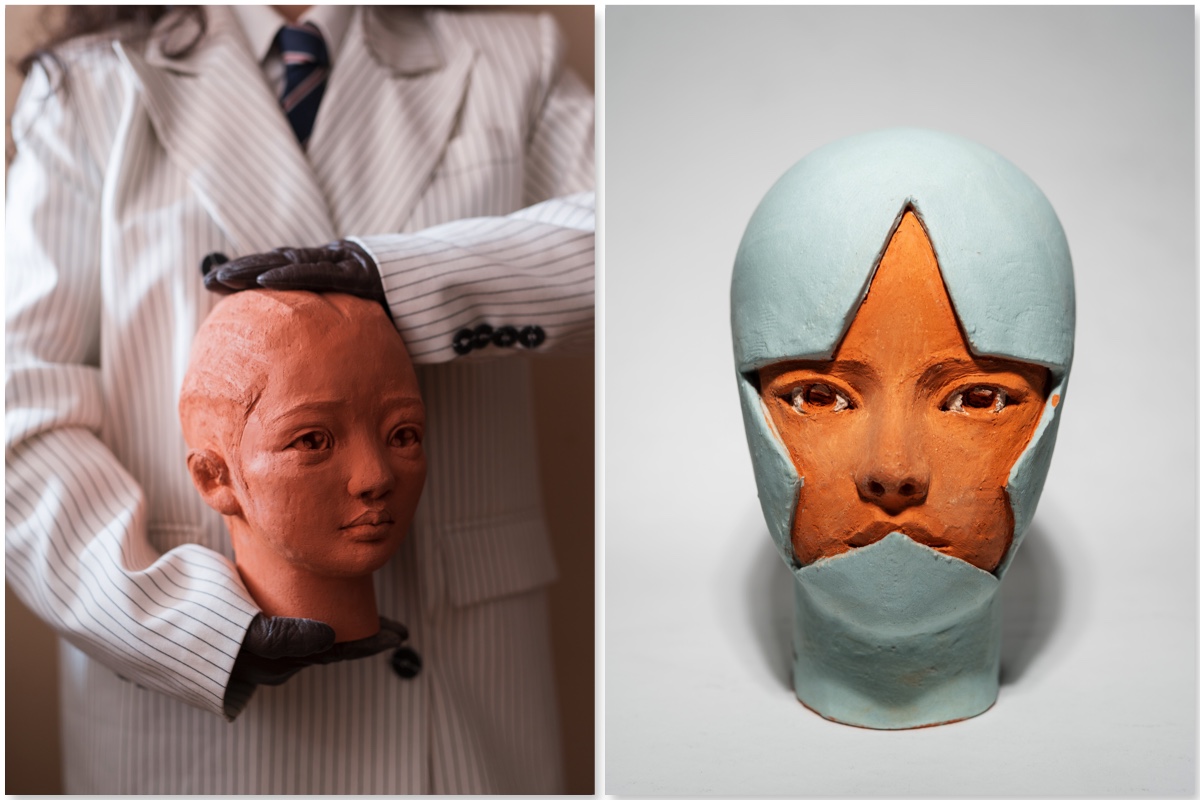
Photography: dreamingof.net, personal arhive of the author.
TAGS: ceramics, collection, exhibition, interview, Rebeca Ulici, Romanian artist
Latest feeds @alinaaliman
